Everything You Need to Know About Olives: From Mediterranean Varieties to Health Benefits
What Are Olives: Stone Fruits, Not Nuts
Olives aren’t nuts—they’re actually stone fruits, scientifically classified as drupes. This botanical classification makes them distant cousins to peaches and cherries, sharing the same basic structure of flesh surrounding a hard pit containing the seed. However, their intensely bitter, oily nature sets them apart from sweet stone fruits.
The scientific name Olea europaea reveals their Mediterranean heritage, where these remarkable trees have anchored civilizations for 6,000 to 8,000 years. Belonging to the Oleaceae family, olive trees are instantly recognizable by their silvery-green leaves that shimmer in Mediterranean breezes and gnarled trunks sculpted by millennia.
The drupe structure consists of the epicarp (skin), mesocarp (flesh), and endocarp (pit), with the mesocarp containing the oil-rich cells that make olives so valuable. These hardy survivors can live and produce fruit for over 1,000 years, representing one of humanity’s oldest agricultural partnerships.
Global Olive Production and Regional Powerhouses
Spain dominates global olive production in an almost absurd way, producing about 45% of the world’s olives—that’s 1.5 million tons annually. Italy comes in second with about 365,000 tons, but the gap is enormous, like comparing a major league baseball team to a good college team. California produces about 70,000 tons annually, which might sound impressive until you realize that’s less than 5% of Spain’s output.
Each region has developed signature varieties that reflect their unique terroir. Greece perfected Kalamata olives with their deep purple color and almond-shaped profile that taste like Mediterranean sunshine. France contributed Niçoise olives—small and intense, perfect for Provençal cuisine—and Picholine varieties. Italy brought us massive Cerignola olives from Puglia, completely different from the small, intense Gaeta olives from Lazio, plus the buttery Castelvetrano variety. Spain mastered the Manzanilla with its crisp elegance.
Olive Cultivation: From Flower to Harvest
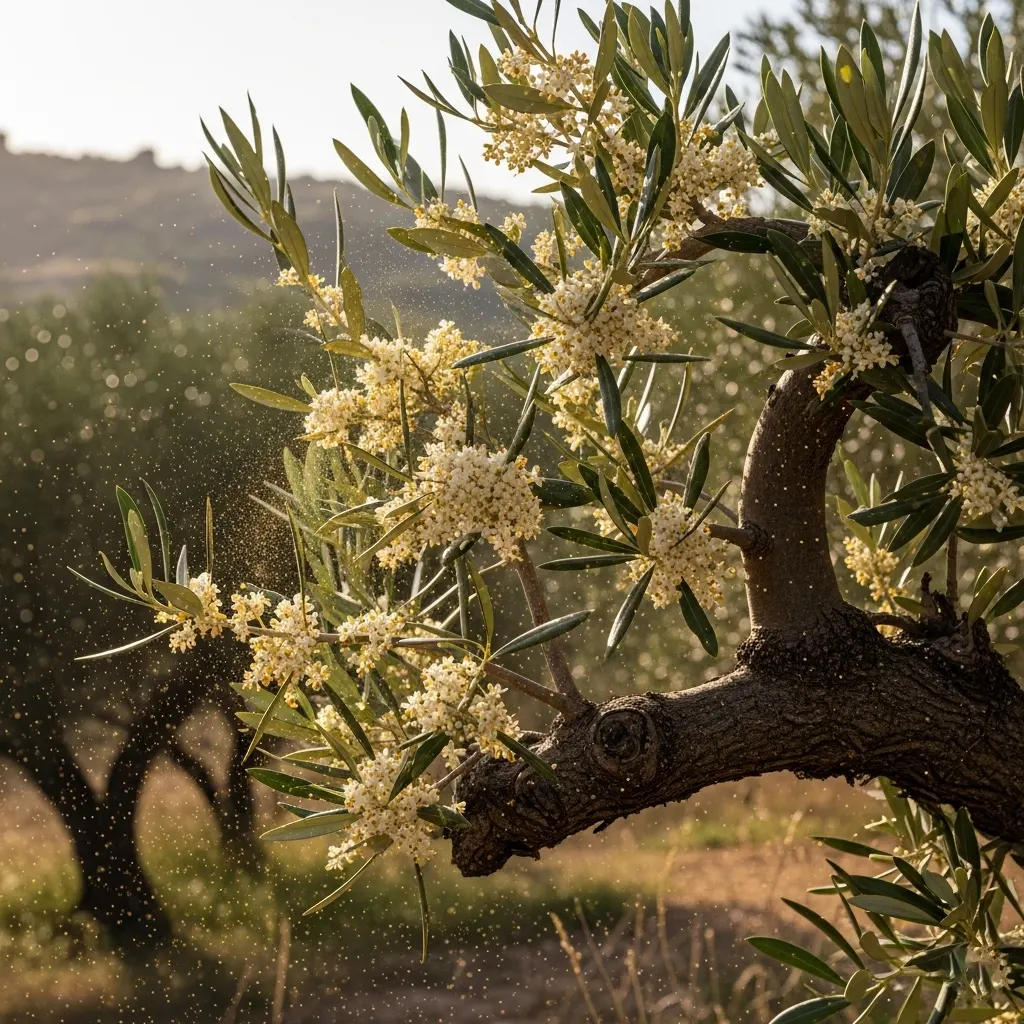
Olive cultivation requires extraordinary patience on a scale most of us can barely comprehend in our instant-gratification world. The process begins in spring (April through June) when small, unassuming white flowers appear in clusters. Unlike showy apple blossoms that attract bees, olive flowers have evolved for wind pollination, releasing lightweight pollen that travels on air currents.
Most olive varieties are self-compatible, meaning they can pollinate themselves, though some cultivars benefit from cross-pollination with neighboring trees of different varieties to improve fruit set. The waiting period spans exactly six to eight months from flower to fruit.
Mediterranean climates provide that Goldilocks zone—hot, bone-dry summers (often exceeding 100°F) followed by mild, wet winters with 15-40 inches of annual rainfall. These trees have evolved remarkable drought tolerance through deep root systems that can extend 20+ feet, but have their limits: sustained temperatures below 15°F will kill them, while extreme heat above 110°F causes stress and reduced fruit quality.
Green vs Black Olives: Harvest Timing Creates the Difference
The distinction between green and black olives isn’t about variety—it’s entirely about harvest timing and the resulting chemical composition. Green olives are picked before ripening, resulting in firm, crunchy texture and intense, sometimes harsh flavors. They contain 15-20% oil content and higher concentrations of antioxidants and phenolic compounds, including chlorophyll that gives them their vibrant color.
Black olives ripen on the tree, developing softer texture and milder flavors as enzymes break down cell walls and phenolic compounds. They contain 20-30% oil content—significantly higher than green varieties—making them easier to cure and often less expensive to process. During ripening, chlorophyll degrades while anthocyanins develop, creating the purple-to-black color progression.
A third category—”turning” olives—are harvested during color change, when both chlorophyll and anthocyanin are present, offering interesting middle-ground characteristics with 17-25% oil content. The higher phenolic content in green olives contributes to their more astringent, bitter taste profile compared to the milder black varieties.
Olive Processing Methods: Making Bitter Fruits Edible
Fresh olives are completely inedible—you could eat one, but you’d immediately regret it. They contain compounds called oleuropein (a phenolic glycoside) that make them incredibly bitter, reaching concentrations of 1-3% in fresh fruit. This is nature’s way of protecting seeds before they’re ready to propagate. Humans developed several curing methods over millennia to break down or leach out these bitter compounds.
Brine curing involves soaking olives in 6-10% salt solution (sodium chloride) for months—sometimes up to a year. During this time, beneficial lactic acid bacteria (primarily Lactobacillus species) work their magic through controlled fermentation. These bacteria consume residual sugars and gradually break down oleuropein into less bitter compounds like hydroxytyrosol and oleuropein aglycone.
Water curing requires repeatedly changing soaking water over several weeks, using osmotic pressure to gradually leach out bitter compounds. This gentler method produces less salty olives but demands patience and careful monitoring to prevent harmful bacterial growth without salt’s preservative effects.
Dry salt curing dramatically transforms olives by literally burying them in coarse salt (often sea salt), which draws out moisture through osmotic dehydration while concentrating flavors. The salt extracts water and bitter compounds over months, creating those wrinkled, intensely flavored varieties with extended shelf life.
Lye curing uses sodium hydroxide (NaOH) for quick commercial processing. The alkaline solution rapidly hydrolyzes oleuropein, stripping bitterness in days rather than months. However, this chemical treatment requires careful neutralization and multiple water rinses, and many traditionalists argue it strips away beneficial compounds and complex flavors.
Olive Nutrition Facts and Caloric Content
A 100-gram serving of olives (that’s maybe 15-20 olives depending on size) contains between 115-150 calories, with about 85-90% of those calories coming from fats. However, these are primarily beneficial fats with an impressive fatty acid profile: about 75-80% monounsaturated fats (primarily oleic acid at 55-83%), only about 10-15% saturated fats (mainly palmitic acid), and the remainder polyunsaturated fats (linoleic acid).
The vitamin and mineral content varies quite a bit depending on variety and processing method, but you’re generally looking at significant amounts of fat-soluble vitamin E (alpha-tocopherol, providing antioxidant protection for cell membranes), plus minerals like iron (essential for oxygen transport), copper (needed for collagen synthesis), and calcium (though bioavailability may be reduced by processing).
The sodium content is where things get tricky—processed olives can contain anywhere from 735 to over 1,500 milligrams of sodium per 100 grams. That’s roughly 30-65% of the daily recommended intake, which can significantly impact blood pressure regulation and kidney function for sensitive individuals.
Health Benefits and Mediterranean Diet Connection
Mediterranean diet research has elevated olives’ health status significantly due to their unique phytochemical profile. The monounsaturated fats, particularly oleic acid, help reduce LDL (“bad”) cholesterol while maintaining or increasing HDL (“good”) cholesterol levels through improved lipid metabolism.
The antioxidant compounds work synergistically: vitamin E protects cell membranes from oxidative damage, while phenolic compounds like hydroxytyrosol (found almost exclusively in olives) demonstrate powerful anti-inflammatory effects by inhibiting pro-inflammatory enzymes. These phenolic compounds, including oleuropein derivatives, may protect against cardiovascular disease through multiple mechanisms: reducing arterial inflammation, improving endothelial function, and preventing LDL cholesterol oxidation—a key step in atherosclerosis development.
Some studies suggest these compounds may also have anti-cancer properties by protecting DNA from oxidative damage and supporting cellular repair mechanisms. However, olives remain calorie-dense at 115-150 calories per 100g, making portion control important for weight management. A reasonable serving of 10-15 olives provides cardiovascular benefits without excessive calories.
Culinary Applications and Cooking Techniques
Olives offer remarkable versatility in cooking applications, adding depth to braised dishes, brightness to salads, and complexity to sauces. Different varieties work better for specific applications—those big, meaty Cerignola olives are perfect for antipasto platters, while smaller Niçoise olives practically dissolve into pasta sauces, leaving behind their essence without overwhelming the dish.
Pitting olives is one of those kitchen tasks that seems simple until you actually try to do it efficiently. A proper olive pitter is worth the investment if you cook with olives regularly. The old chef’s knife trick works—place the flat side of the knife on the olive and give it a firm press—but it’s messy and can turn your cutting board into a crime scene.
Tapenade, the French olive paste, transforms simple bread into memorable appetizers. The key is understanding that each variety brings different characteristics: large olives provide meaty texture, while small varieties contribute intense flavor concentration.
Olive Oil Connection and Thermal Stability
The same fruit-producing complex table olives also yields world-class cooking oil through mechanical extraction of oil-rich mesocarp cells. Extra virgin olive oil retains many beneficial compounds found in whole olives, just concentrated—phenolic compounds, vitamin E, and the same oleic acid profile.
Despite misconceptions about thermal stability, extra virgin olive oil has a smoke point around 375°F (190°C), making it perfectly stable for most home cooking applications. The natural antioxidants (particularly vitamin E and phenolic compounds) actually help protect the oil from oxidative breakdown at moderate temperatures, preventing the formation of harmful free radicals.
For high-heat applications like deep frying, light olive oil or refined olive oil can handle temperatures up to 465°F (240°C) due to removal of volatile compounds during processing. The refining process removes some beneficial compounds but increases thermal stability. Compared to neutral oils like canola (smoke point 400°F), olive oil offers superior flavor complexity and antioxidant content, though canola does provide more omega-3 fatty acids.
Storage Guidelines and Quality Selection
When shopping for olives, olives with pits generally have better flavor and texture than pitted ones—the pit helps preserve the integrity of the fruit during processing. Look for olives that seem plump and firm, avoiding anything that looks shriveled or mushy (unless you’re specifically buying dry-cured olives, which are supposed to be wrinkled).
The brine or oil the olives are stored in tells you a lot about their quality. It should be clear or only slightly cloudy, not murky or off-colored. Taste remains the ultimate quality test—good olives should have complexity with some saltiness, yes, but also fruitiness, maybe a hint of bitterness that’s pleasant rather than harsh.
Once you get them home, keep opened jars in the refrigerator and make sure the olives stay submerged in their brine or oil. They’ll keep for several weeks this way, though the quality will slowly decline over time.
Regional Olive Varieties and Traditions
Spanish Manzanilla olives exhibit crisp elegance reflecting precise processing methods. Greek Kalamata olives, with deep purple color and almond shapes, capture Mediterranean sunshine in their distinctive flavor profile. French Niçoise olives are small and intense, perfect for Provençal cuisine’s sophisticated simplicity.
Italian olive culture varies dramatically by region. Massive Cerignola olives from Puglia differ completely from small, intense Gaeta olives from Lazio. The buttery Castelvetrano variety represents another distinct Italian contribution to global olive culture. Each represents centuries of local knowledge adapted to specific microclimates and soils, creating unique terroir expressions in every variety.
Climate Change and Sustainability Challenges
Climate change poses real challenges for olive cultivation. These trees need that specific Mediterranean climate pattern—hot, dry summers and mild, wet winters—and as weather becomes more unpredictable, growers are having to adapt in several ways. Some are experimenting with new varieties that can tolerate more extreme conditions, while others are moving their operations to higher elevations or more northern latitudes where they can recreate the necessary climate conditions.
There’s also growing interest in the sustainability of olive production. Traditional olive groves support incredible biodiversity, providing habitat for numerous species, but intensive modern plantations can be quite different environmentally. Some producers are returning to more traditional methods, which often produce more flavorful olives anyway while supporting better ecological balance.
📌 Did You Know?
- Olive trees can live and produce fruit for over 1,000 years
- The word “olive” comes from the Latin “oliva,” which derived from the Greek “elaia”
- Spain produces enough olives annually to circle the Earth’s equator if laid end-to-end
- Fresh olives contain compounds so bitter they’re completely inedible without processing
- California’s Mission variety olives were brought by Spanish missionaries centuries ago
So many facts about Olives which I didn’t know before..